What makes a treat natural
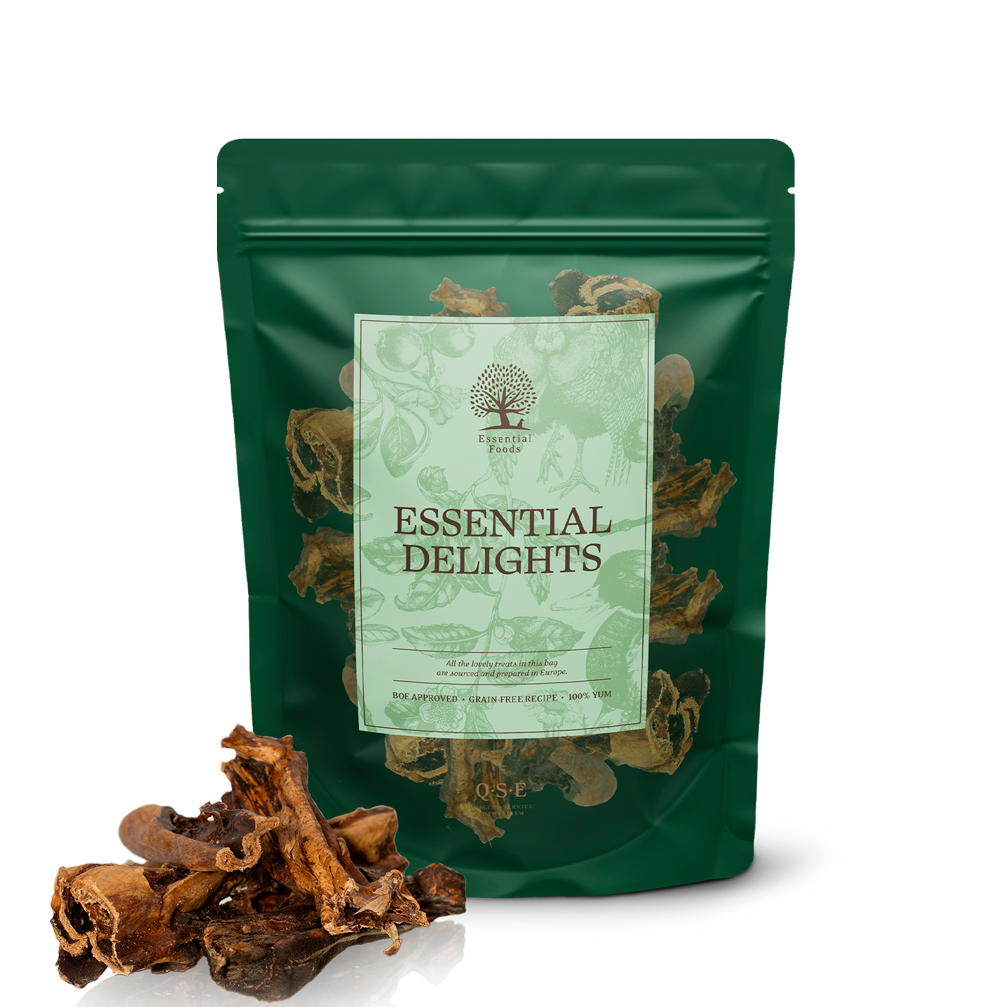
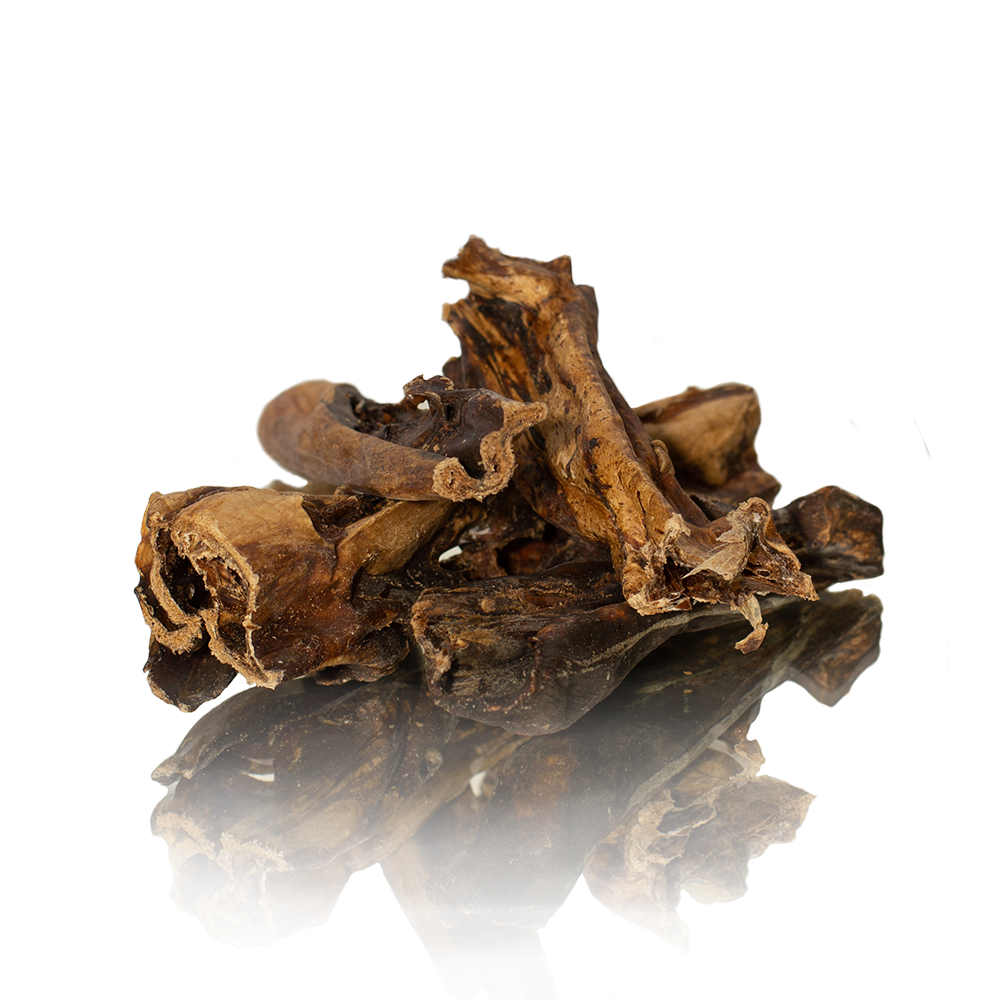
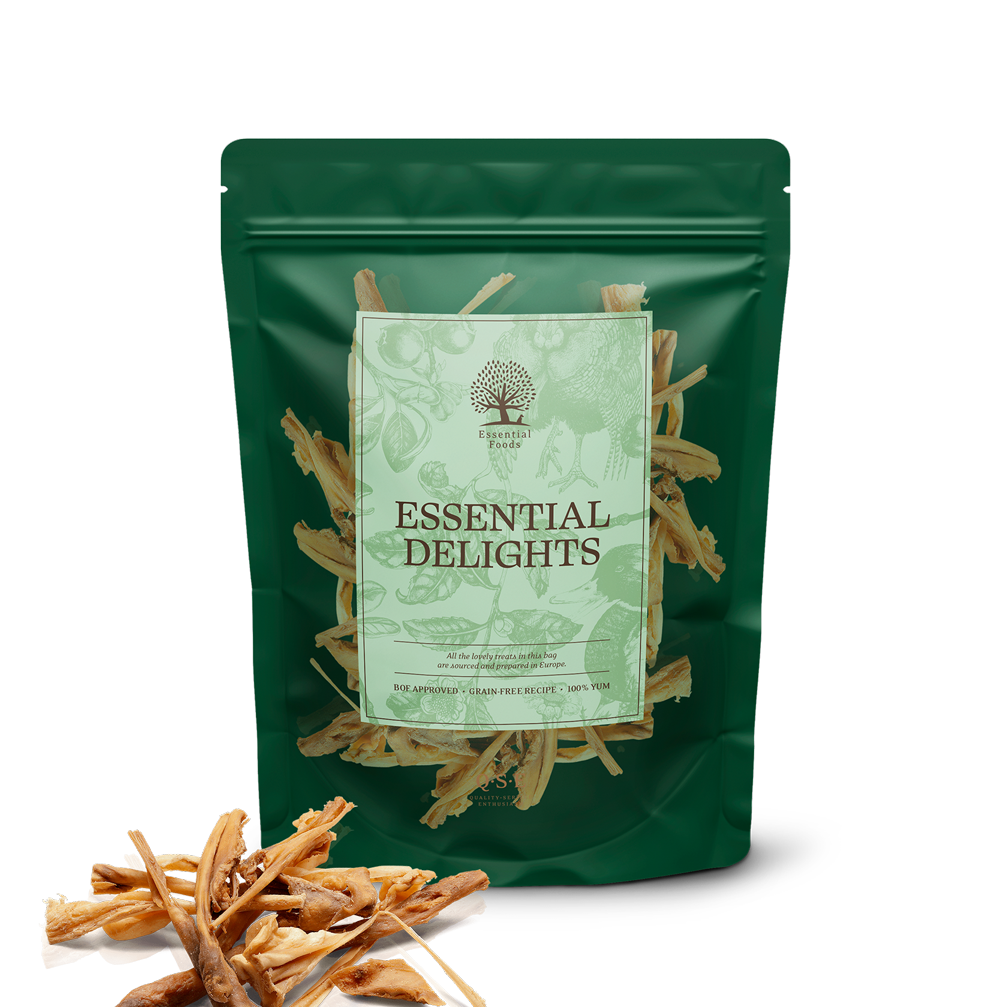
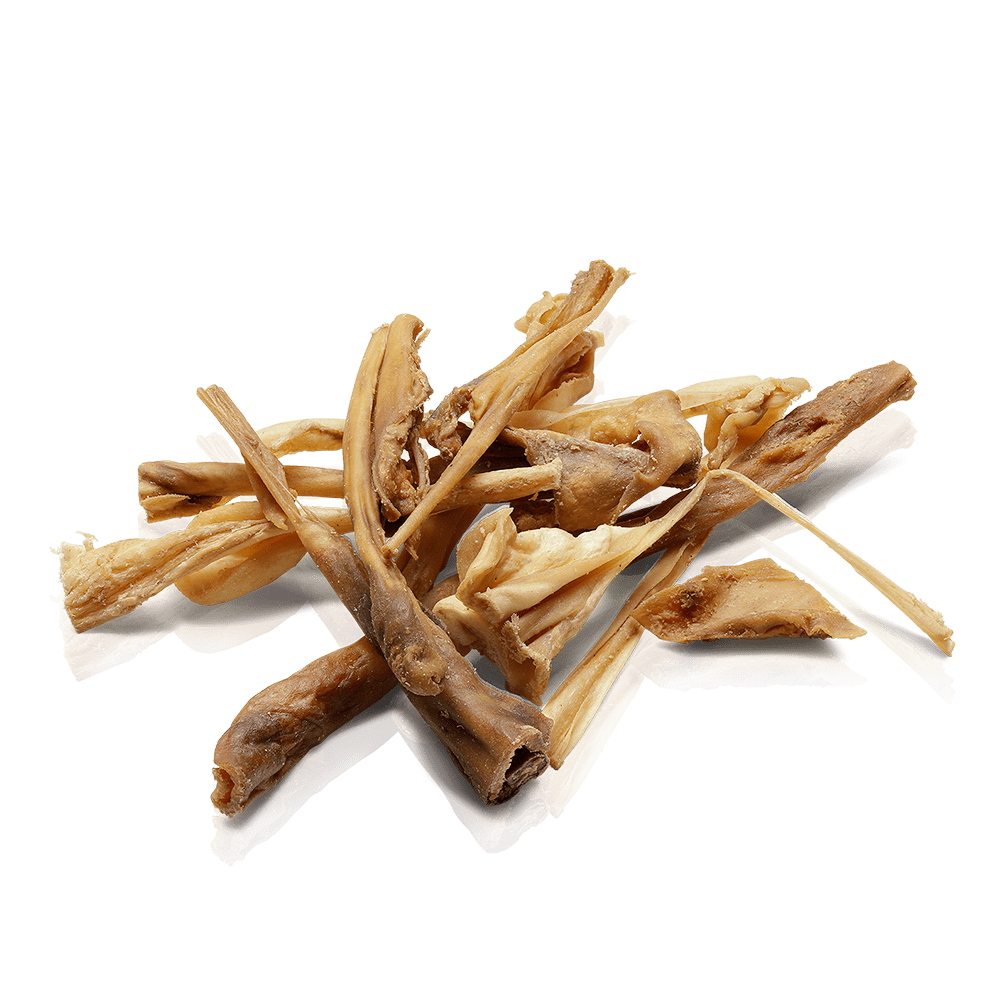
A natural dog treat is made from one or a few pure raw ingredients, typically meat, offal, fish or skin, with no added sugar, grain, artificial colours, flavours or chemical preservatives. In practice this means the ingredient list is short and readable: if it says turkey, then the treat is turkey. That is the most important difference between the treats here and most industrial snacks in the supermarket, where the meat is often a minor component and the rest is grain, by-products, sugars and additives that retain moisture, colour and shelf life.
The reason it is at all possible without preservatives is the drying. When most of the raw ingredient's water content is drawn out, bacteria and mould no longer have enough moisture to grow. That is why a dried treat can keep for a long time in a completely natural way. You can see the whole range of pure, single-protein treats in Delights Treats, and if you want to understand the thinking behind the British raw ingredients, we go into depth in the finest British ingredients that never let you down.
Choose by protein, not by shape
The most useful starting point when choosing is the protein source, not whether the treat is a stick, a slice or a piece of skin. The protein determines both the flavour, how easily the treat is digested, and whether it suits a dog that cannot tolerate everything.
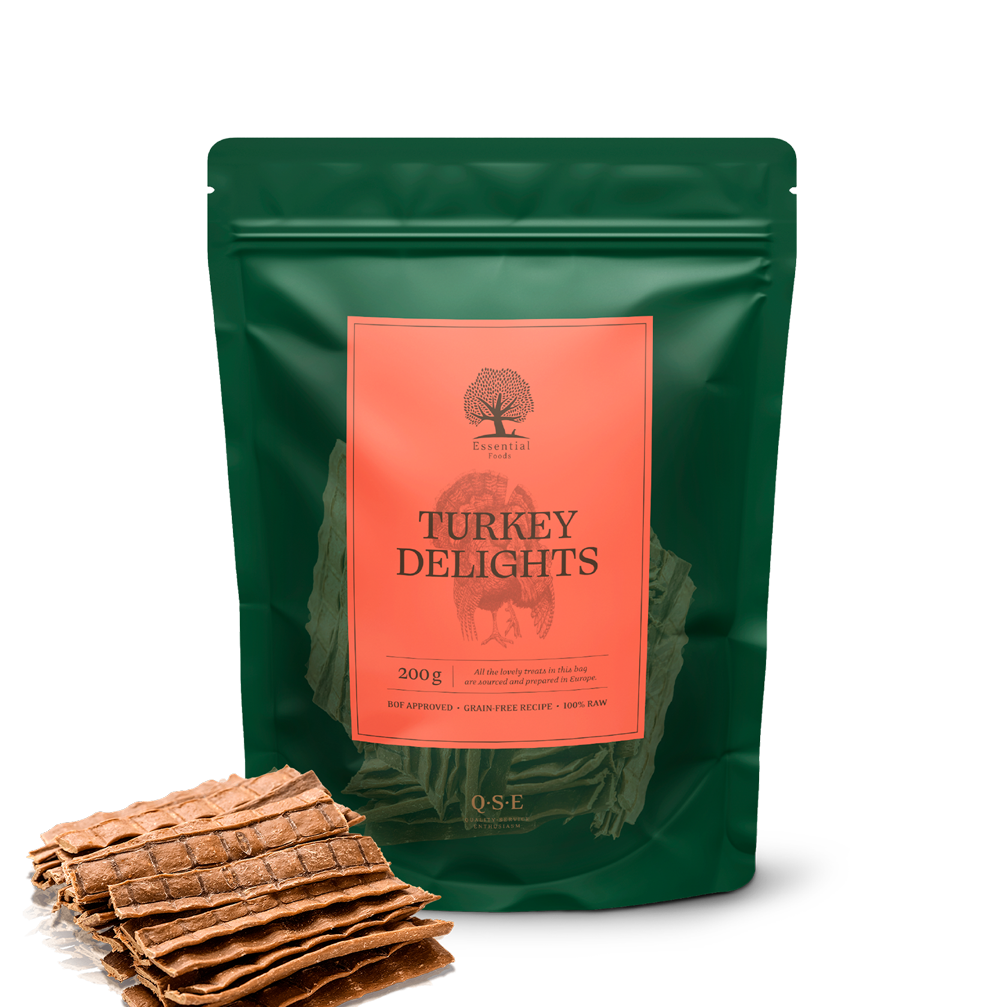
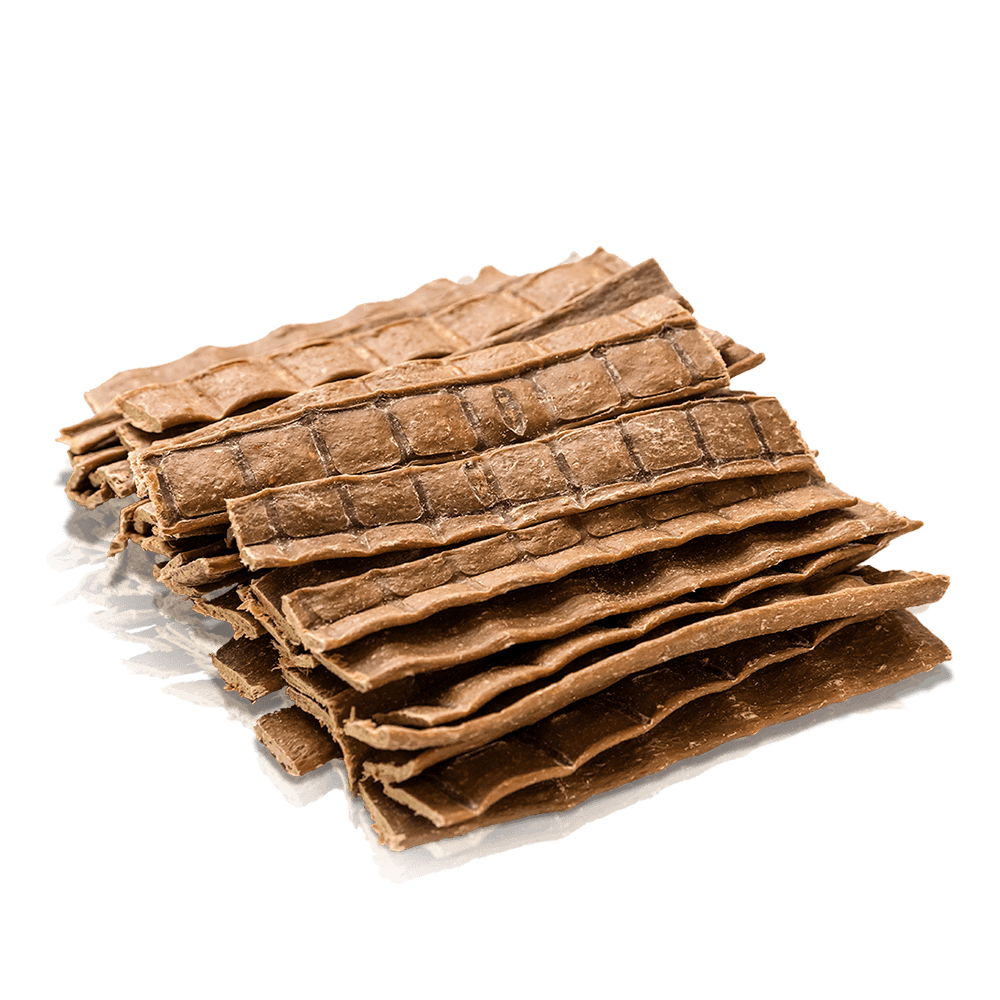
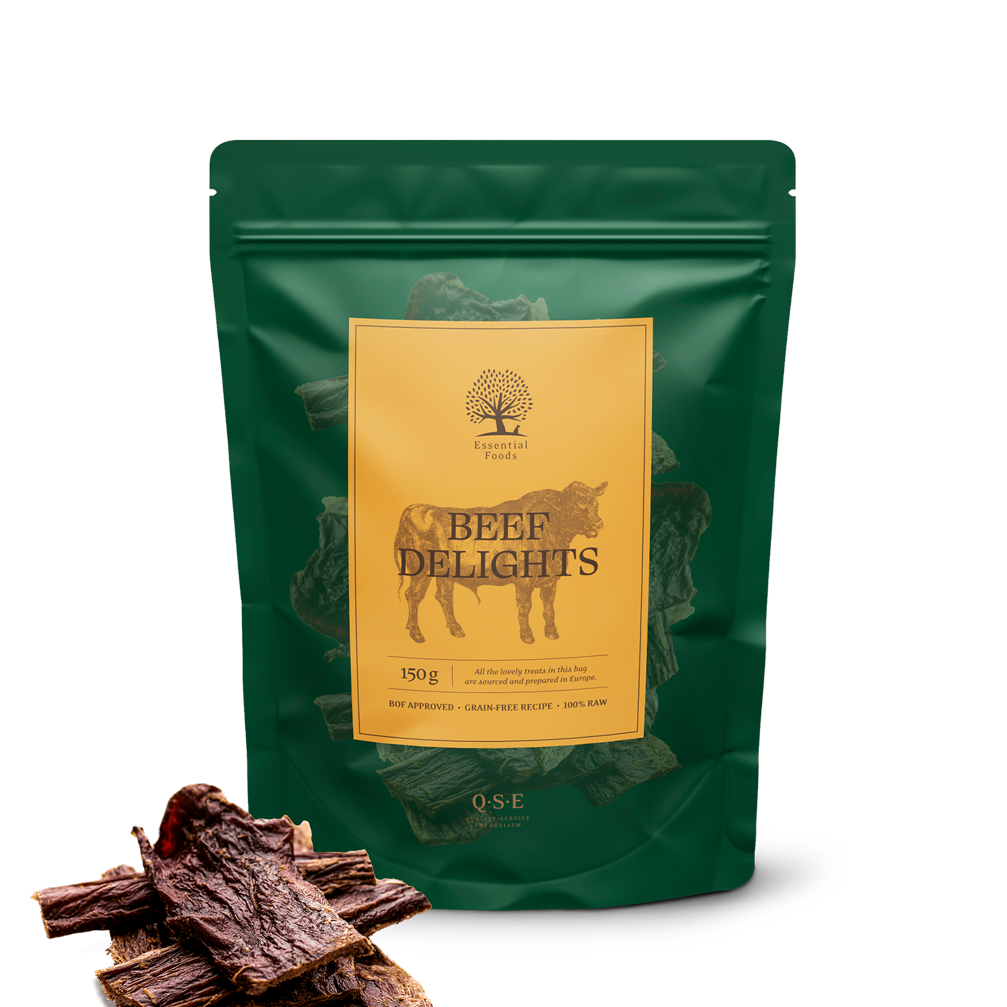
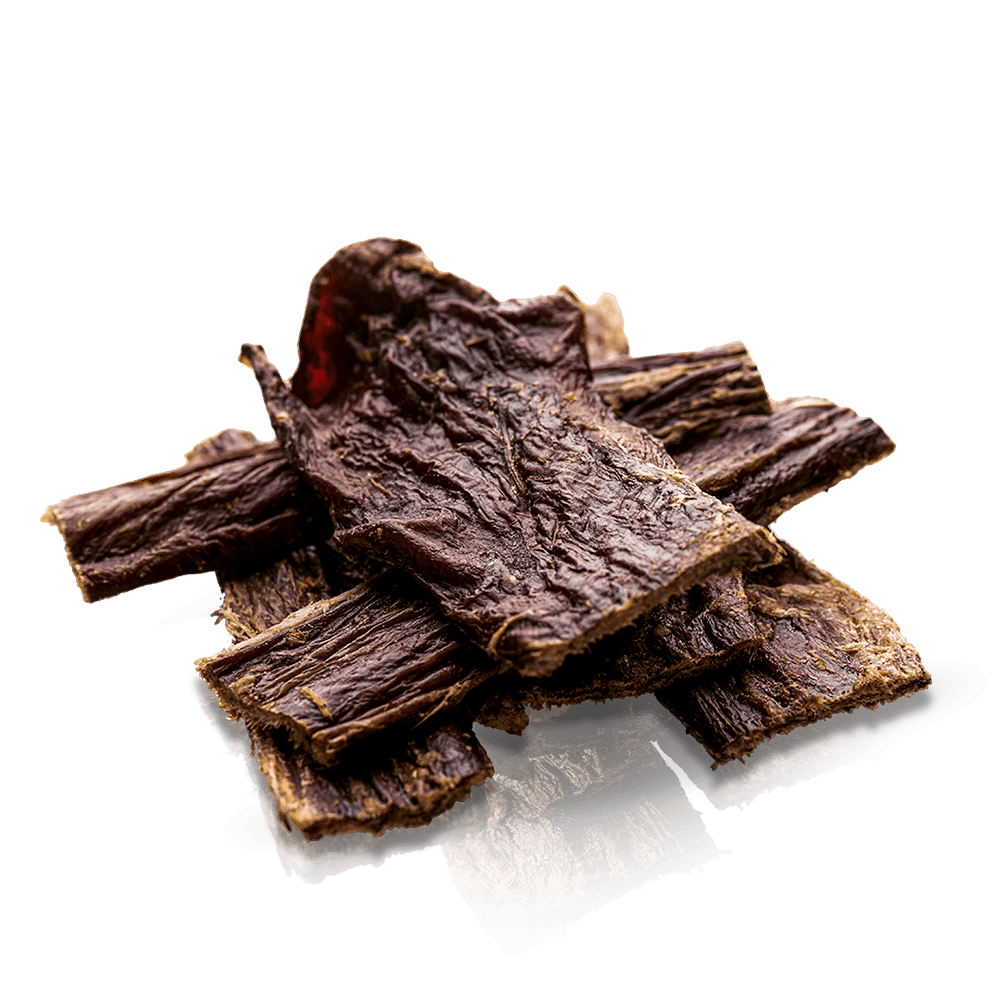
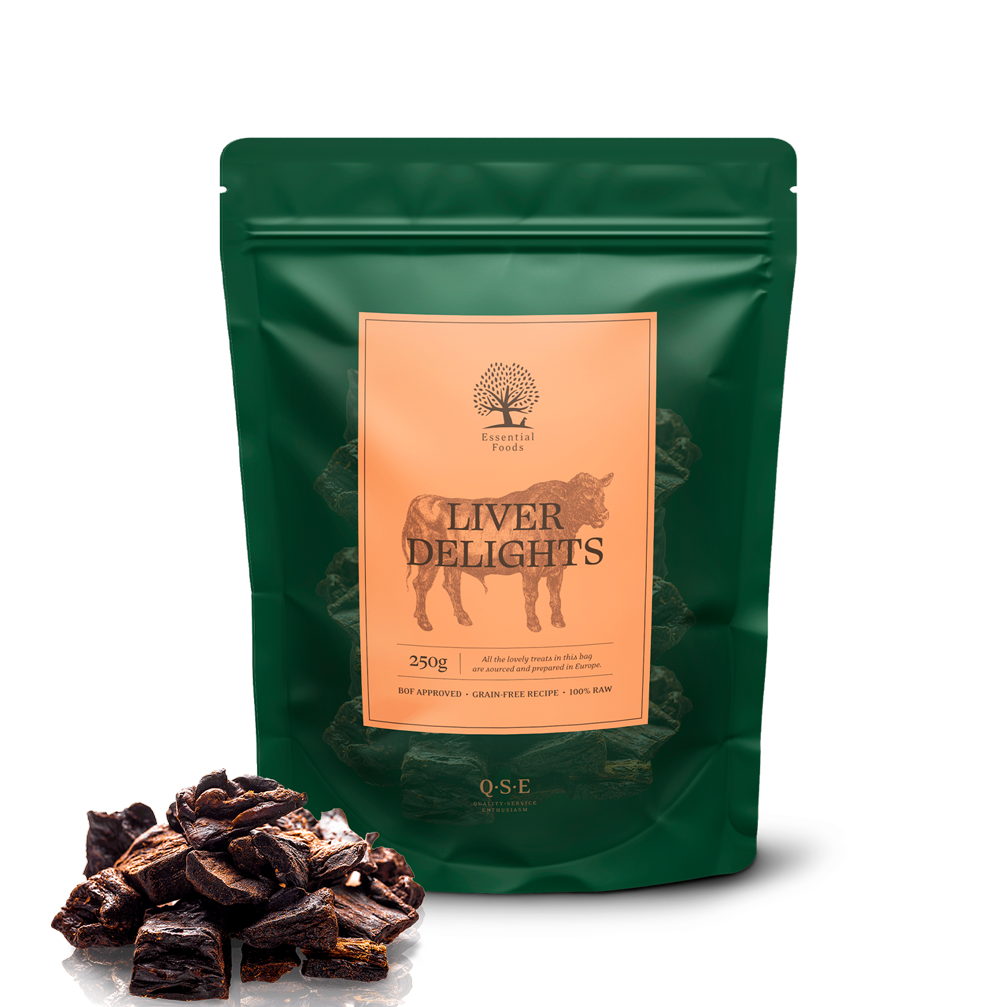
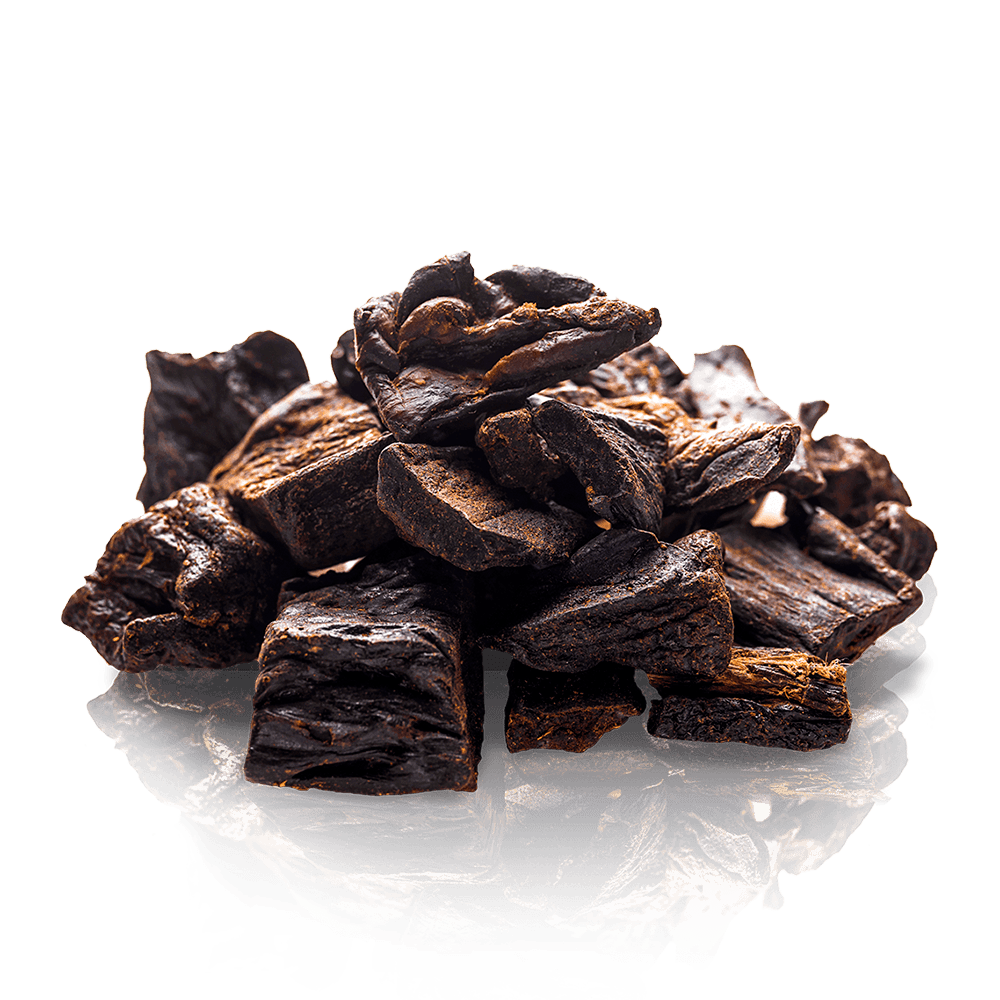
The range here covers a broad spectrum of meat types:
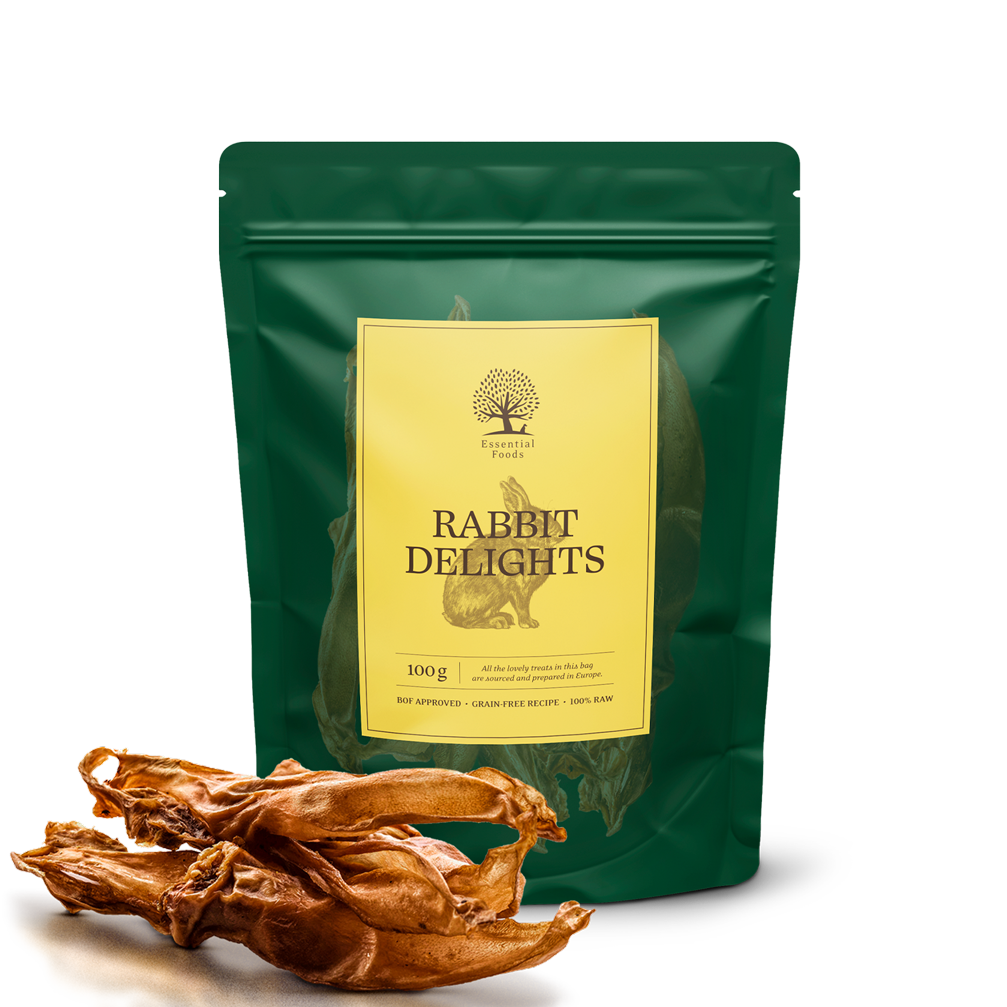
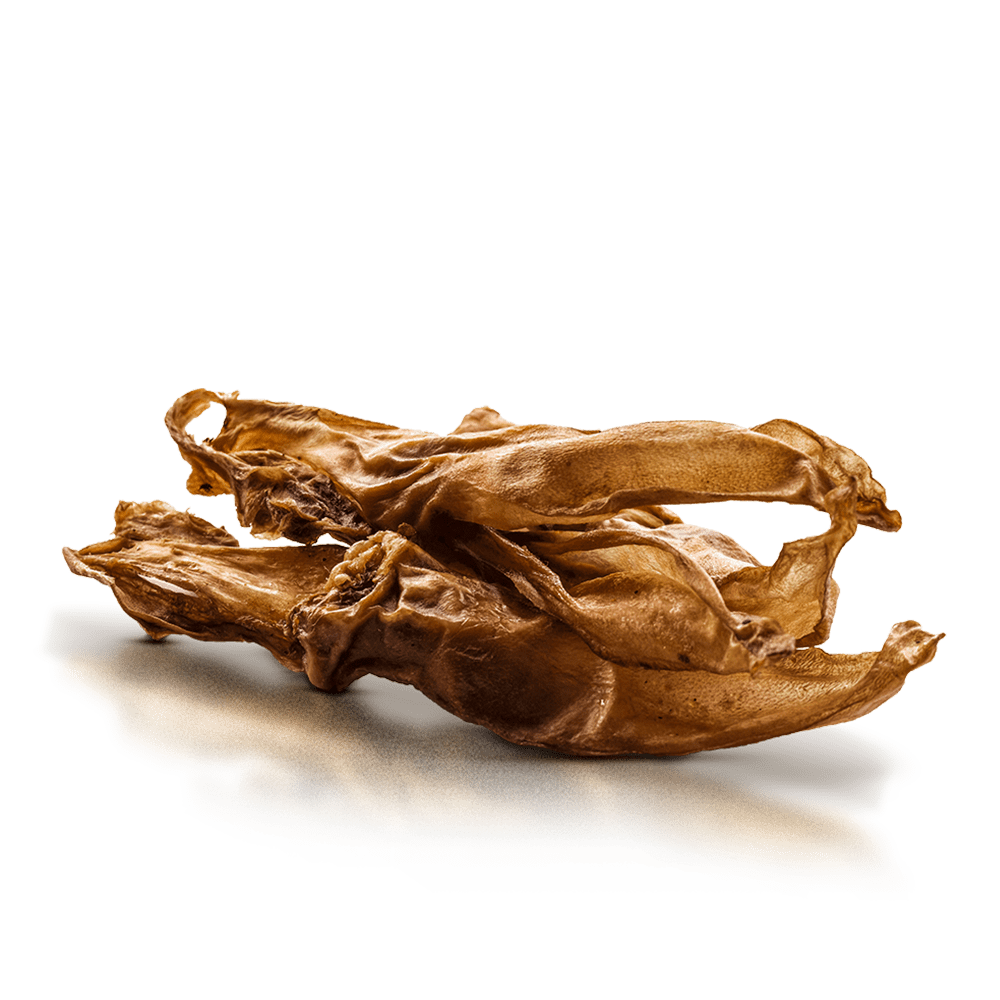
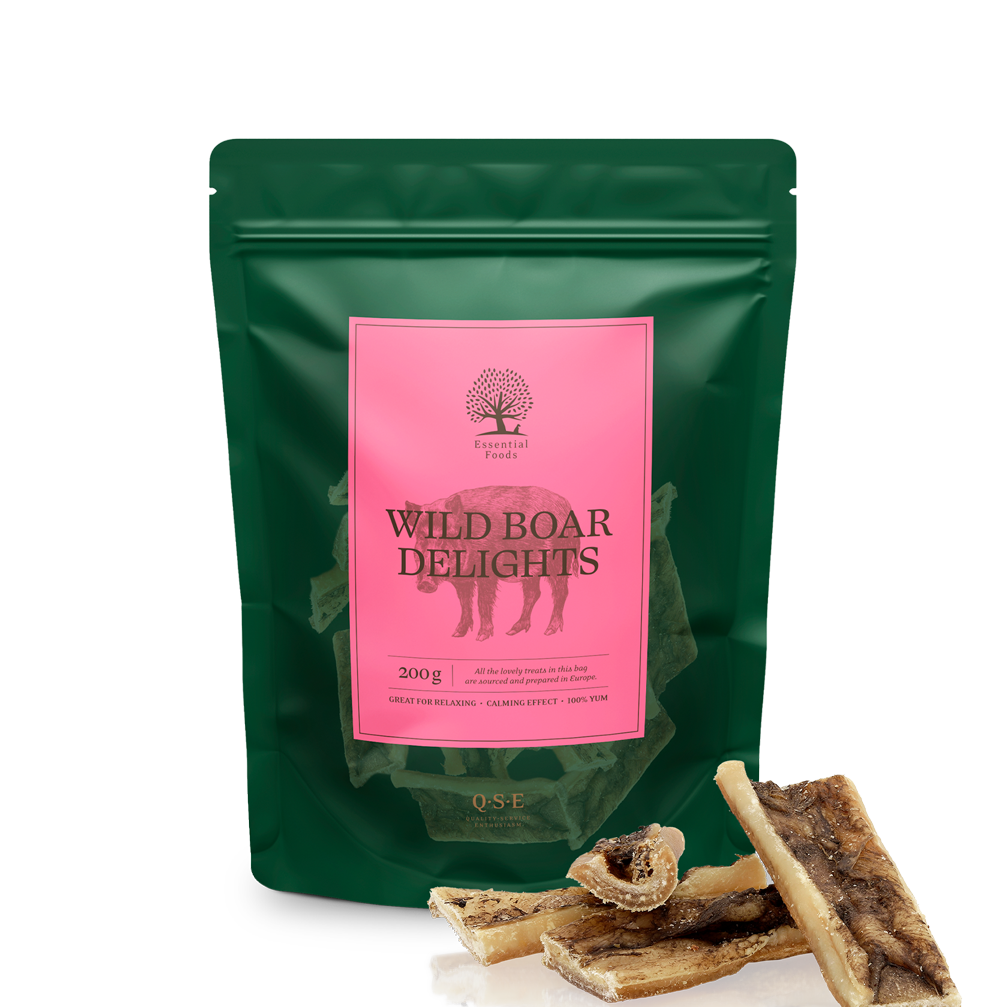
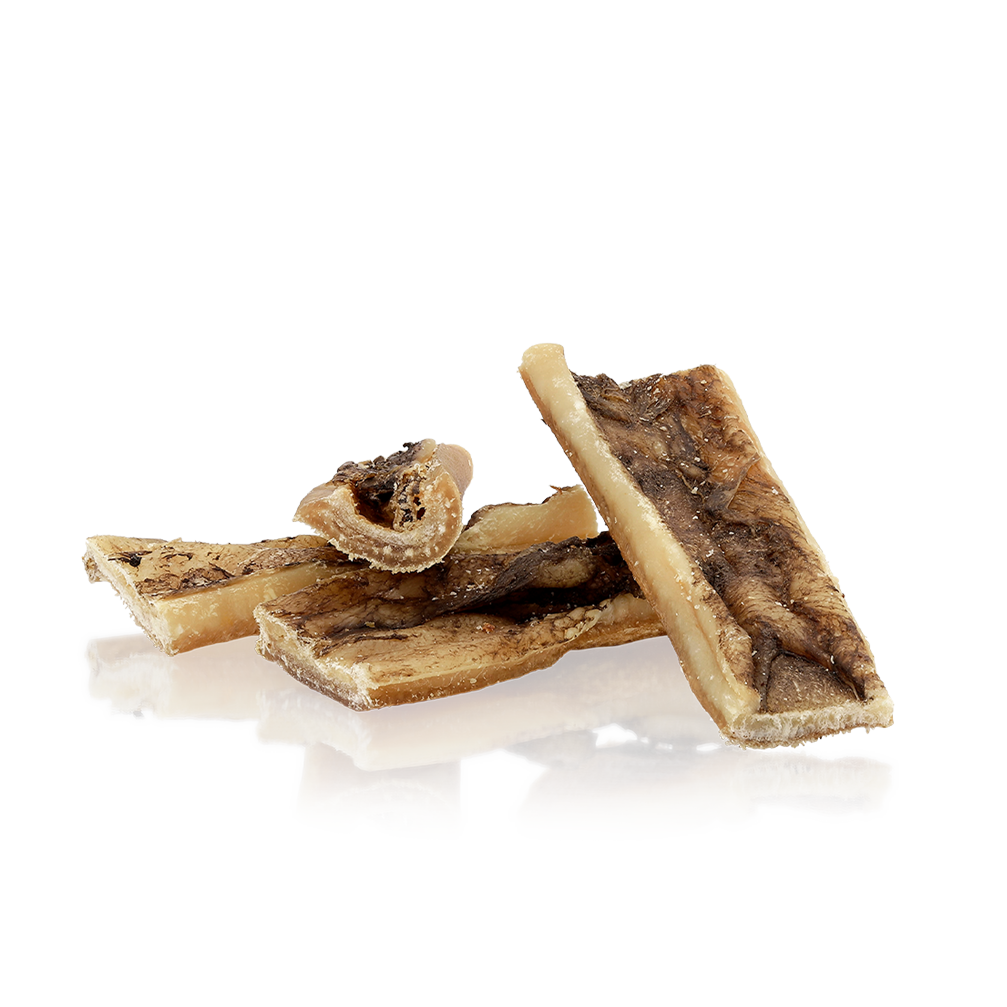
Rabbit and wild boar are worth knowing if your dog reacts to the common proteins. They are so-called novel proteins, that is, meat types the dog has rarely encountered before, which makes them an obvious choice when you want to stay away from what the stomach already knows.
Fish for allergy-friendly and sensitive dogs
Fish deserves its own place, because it solves a specific problem: dogs that cannot tolerate land-animal protein. If your dog reacts to beef, chicken or lamb, fish is often what the stomach and skin handle most easily.
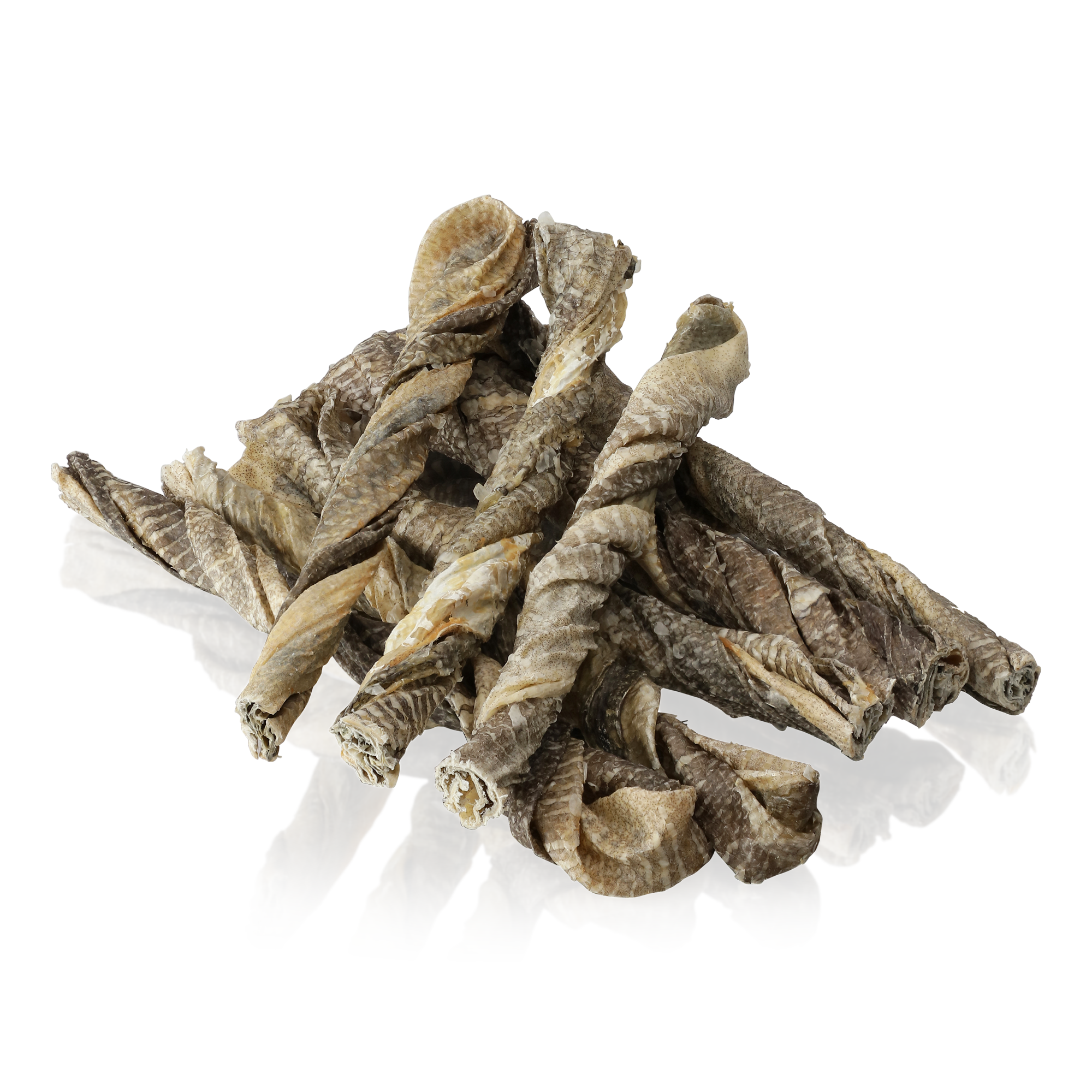
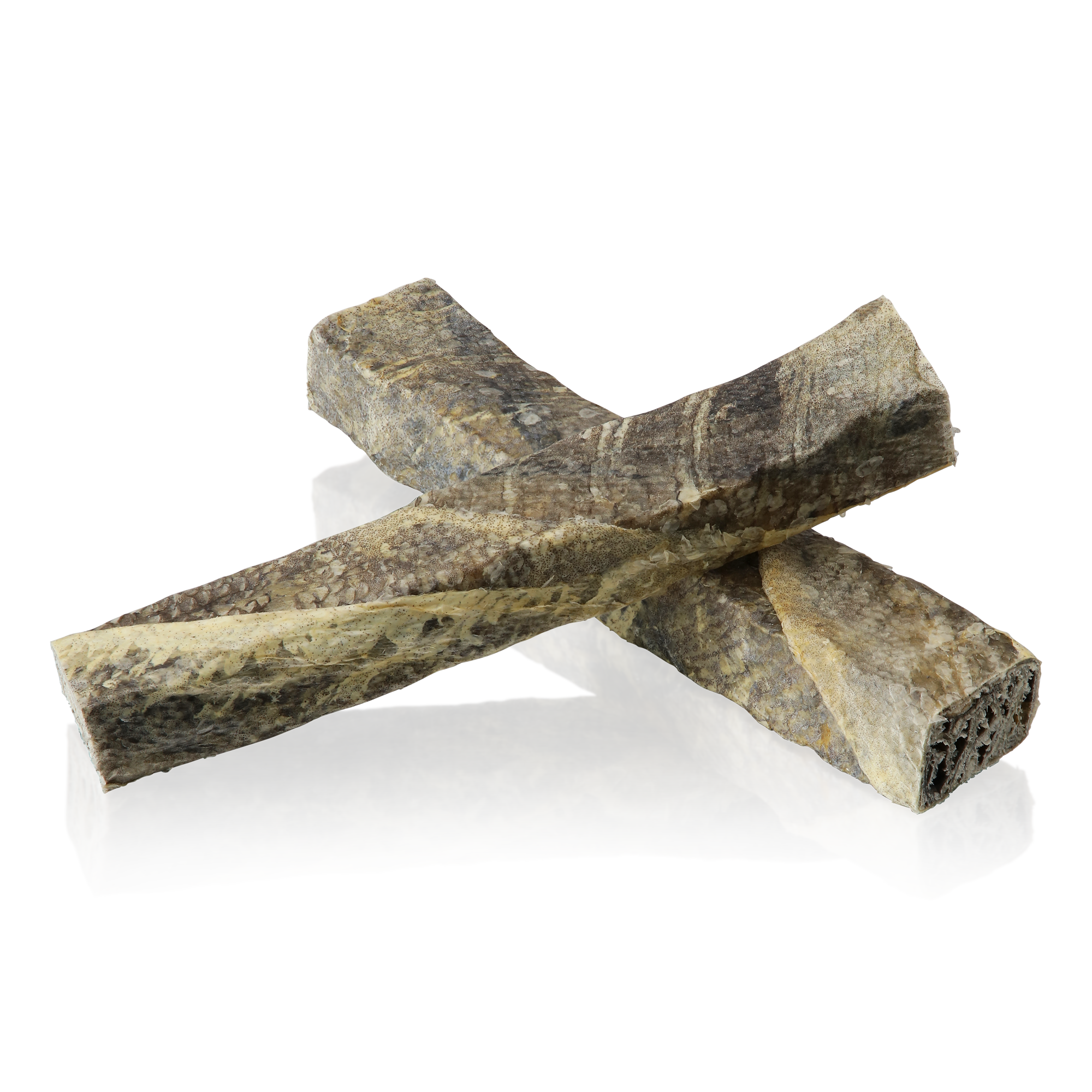
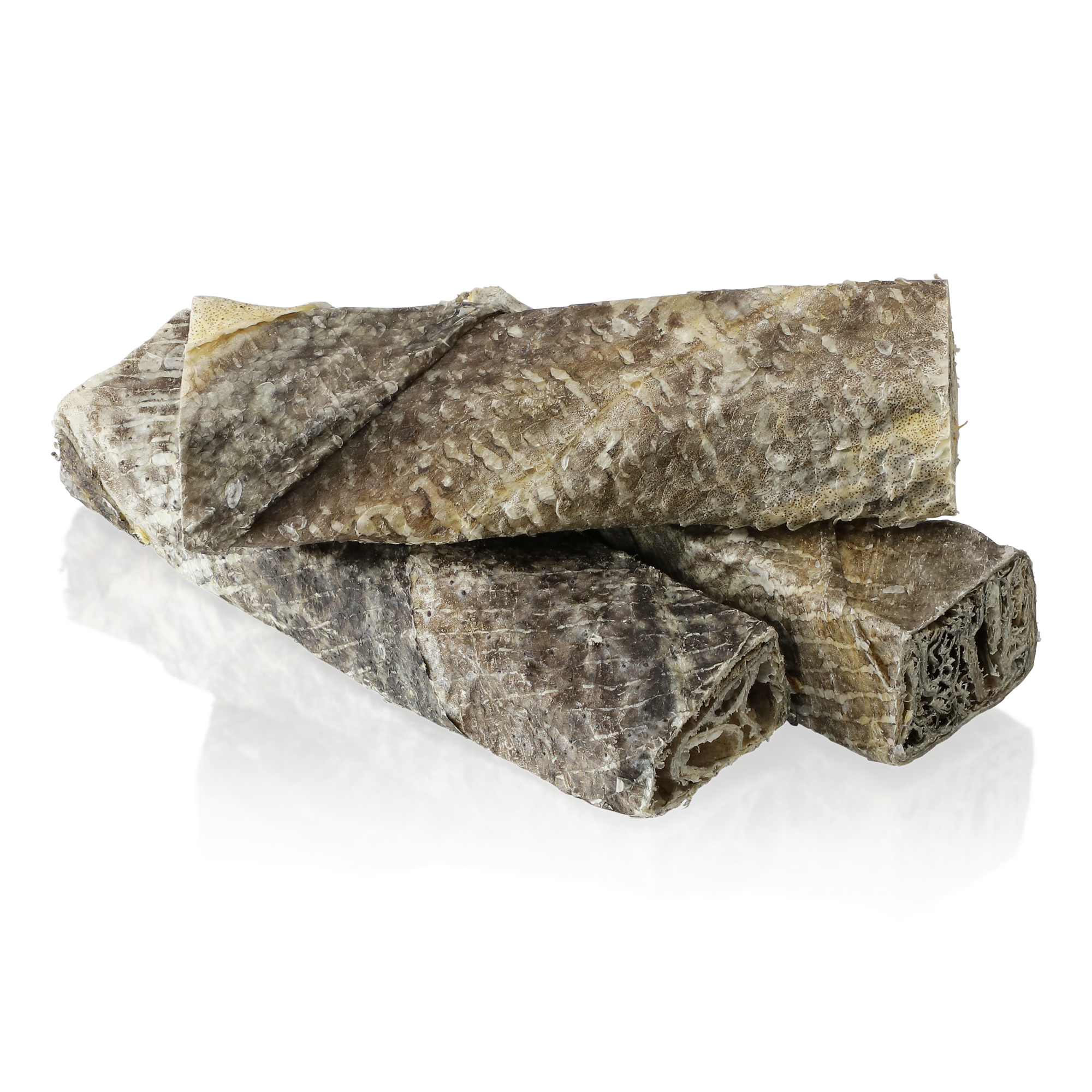
In addition, oily fish is a natural source of omega 3 fatty acids, which support coat and skin. The range spans from ICELAND FISH DELIGHTS and the crispy SMALL COD FISH DELIGHTS and LARGE COD FISH DELIGHTS to the chewier NORTH SEA CHEWY FISH DELIGHTS. For training, where you need many small rewards in a row, TINY FISH DELIGHTS are easy to portion without filling the dog up. If you want to read more about feeding dogs with a delicate stomach, we have gathered the advice in best dog food for sensitive stomachs.
Chew treats for dental care and longer chewing time
Some treats are eaten in a second, others take effort. The latter type has a practical advantage beyond the flavour: When the dog chews for a long time on something hard, the chewing surface scrapes against the teeth and helps loosen deposits before they settle as tartar. At the same time, prolonged chewing is calming and gives a restless dog something legitimate to use its jaws on.
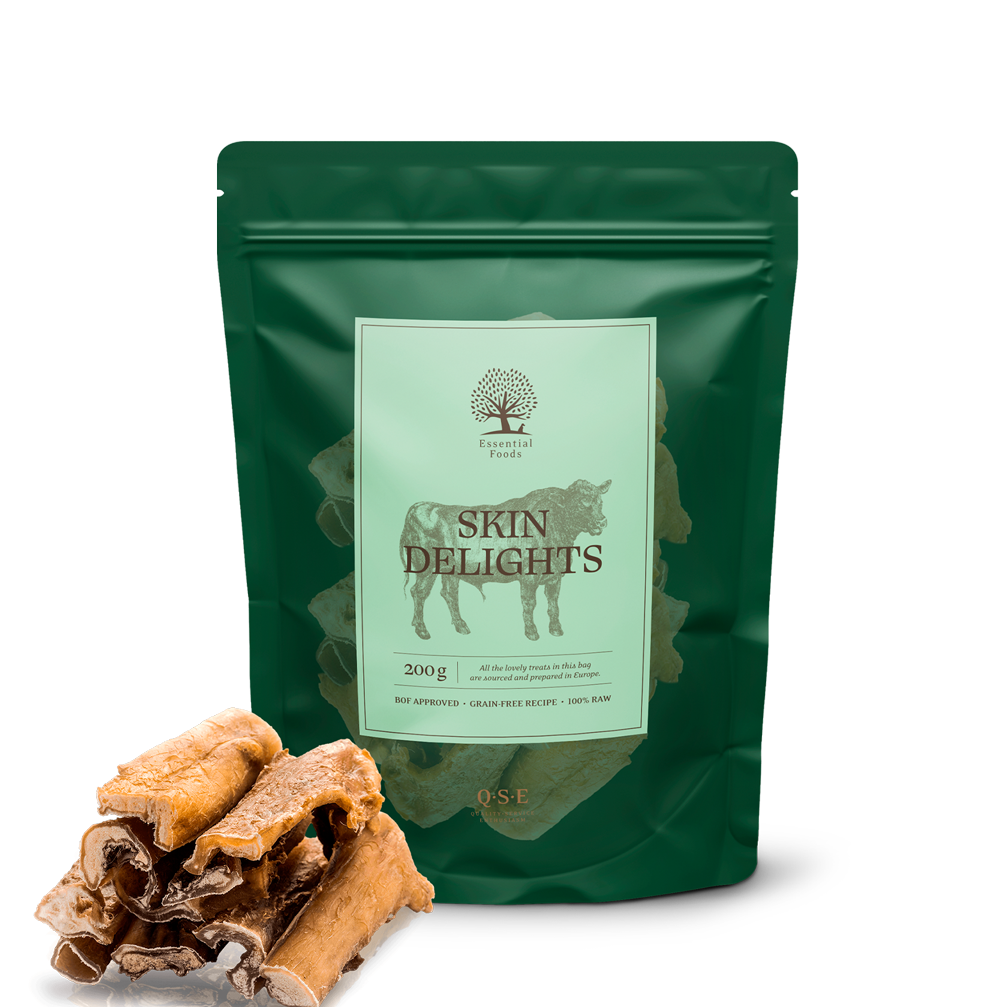
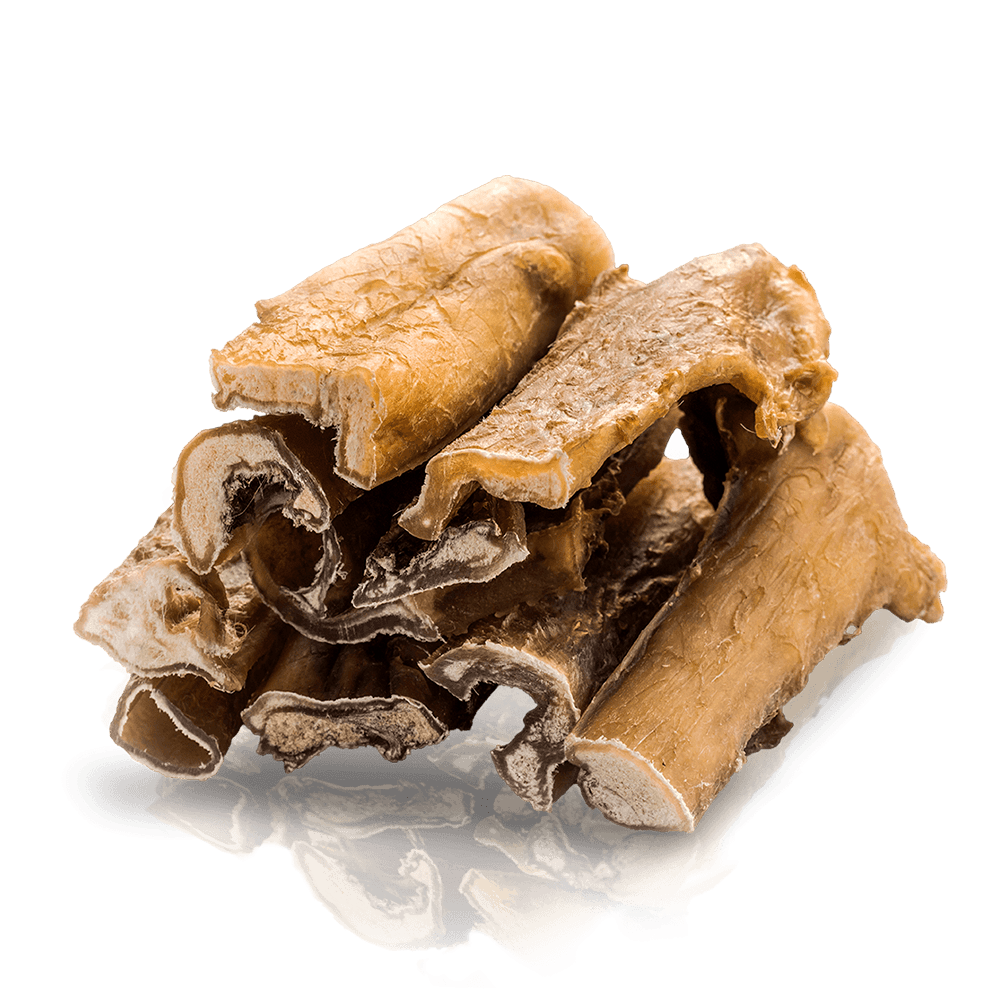
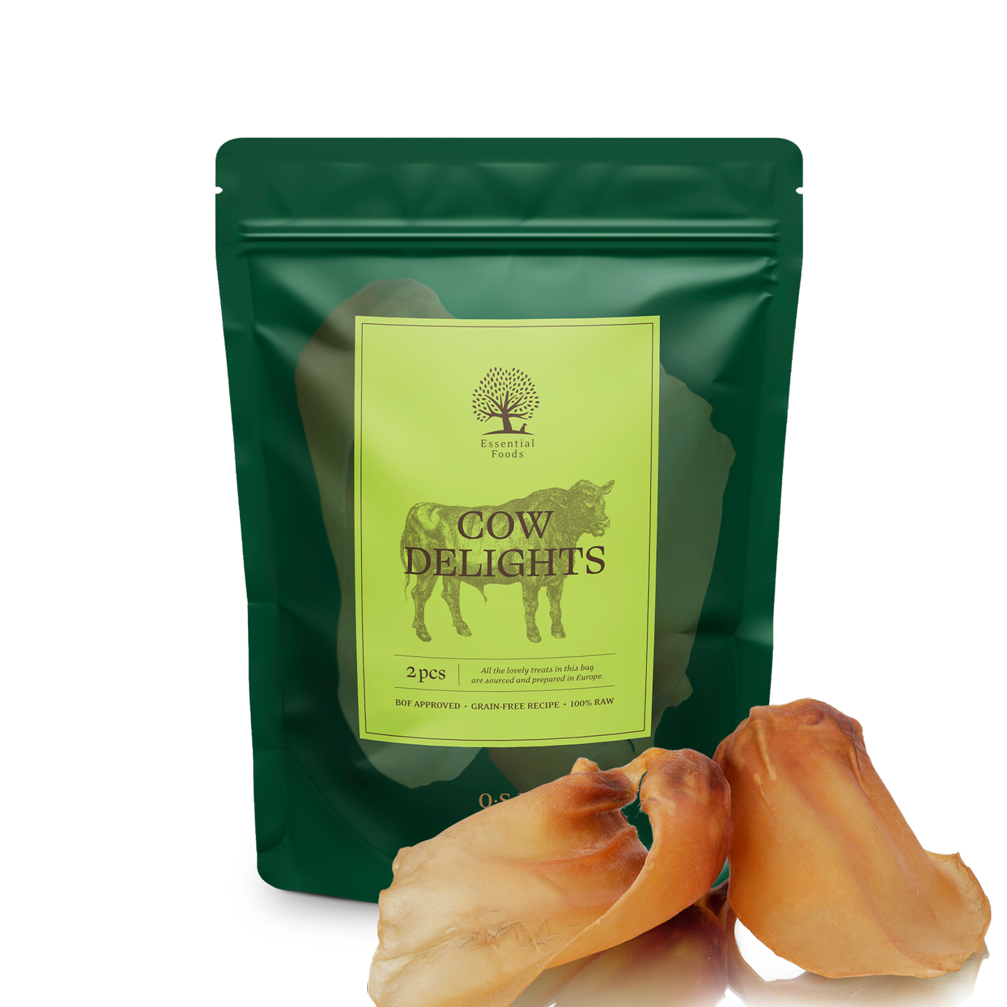
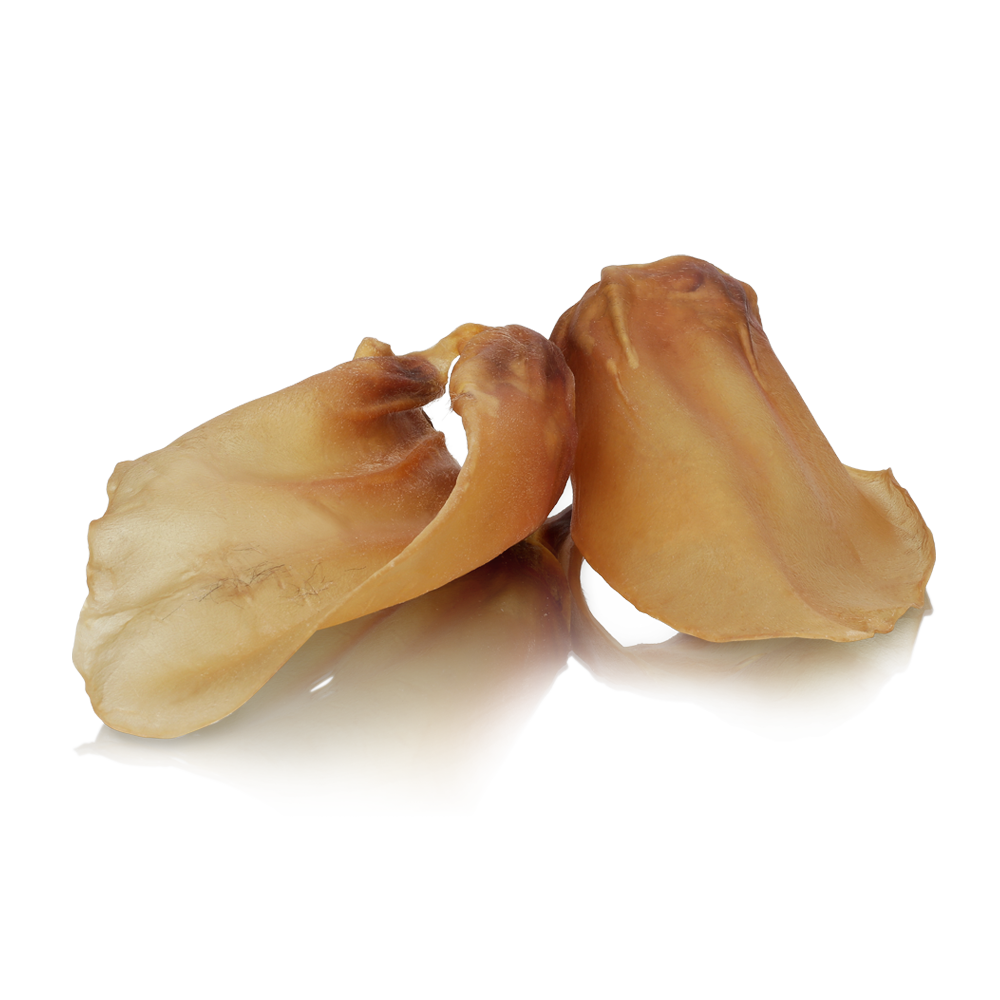
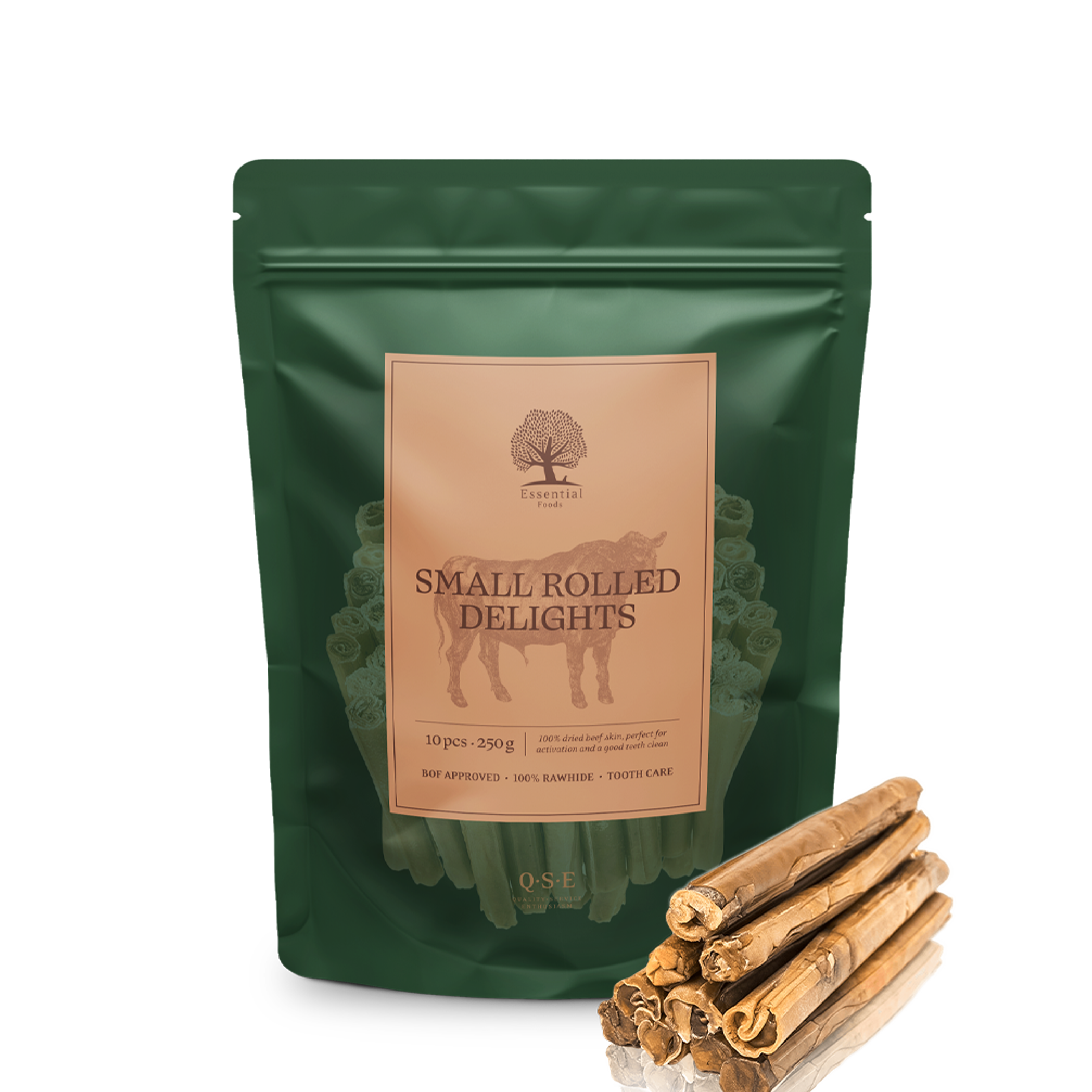
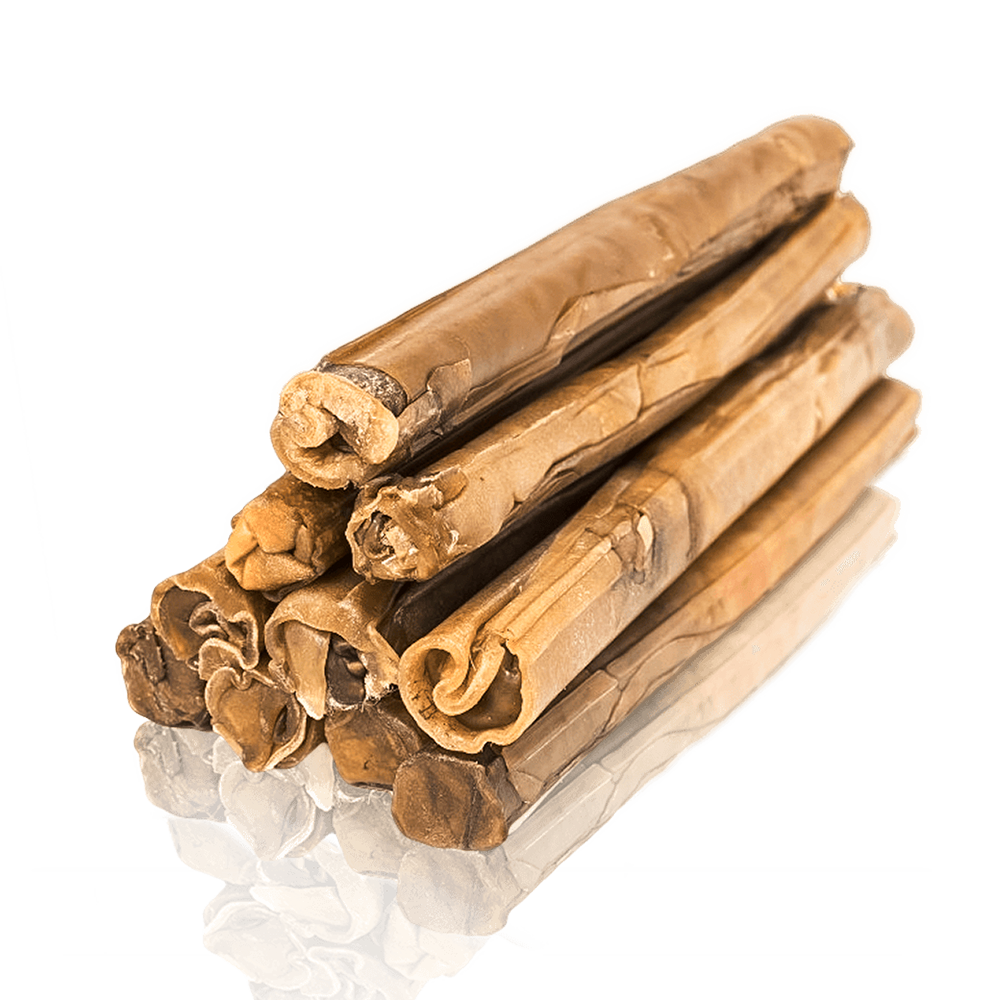
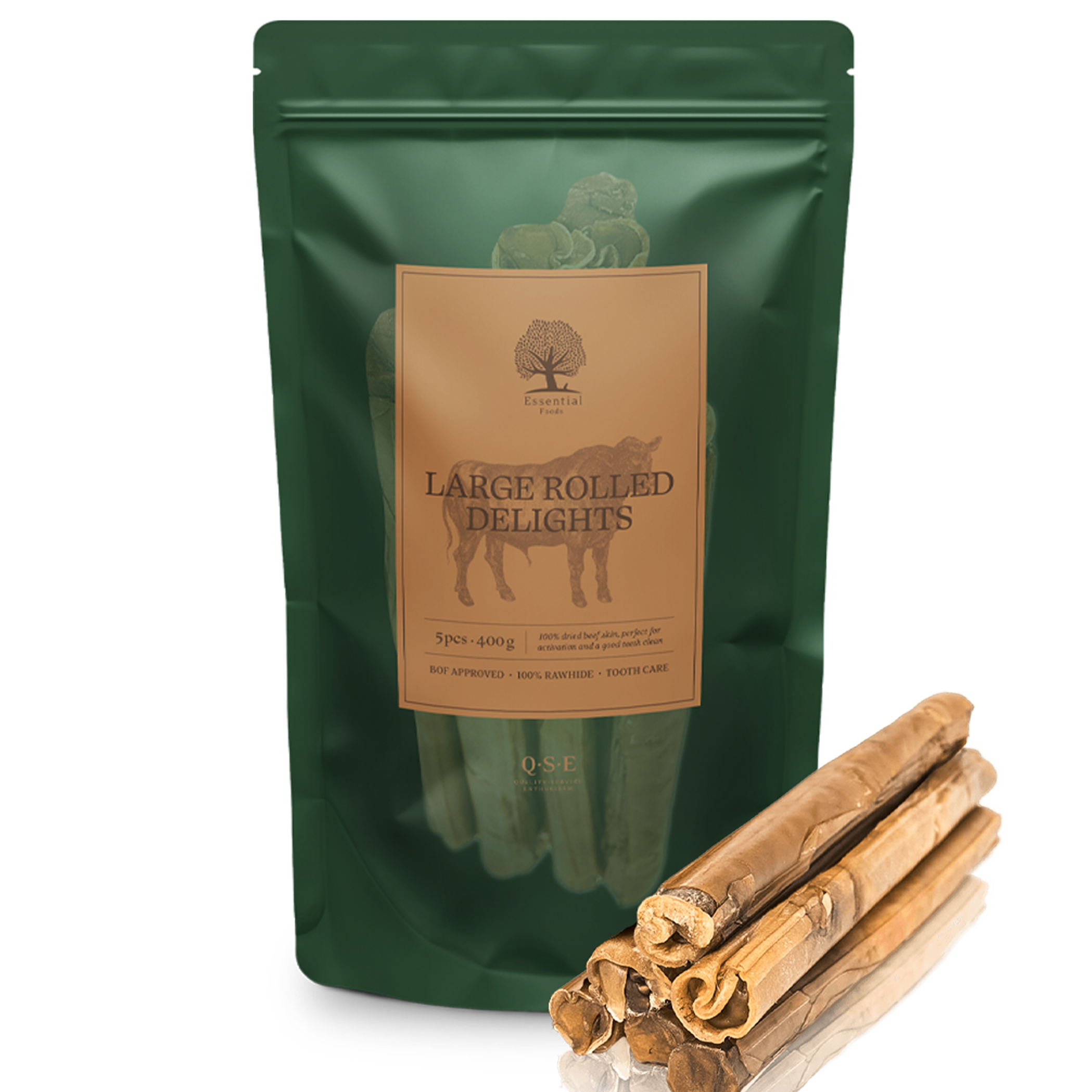
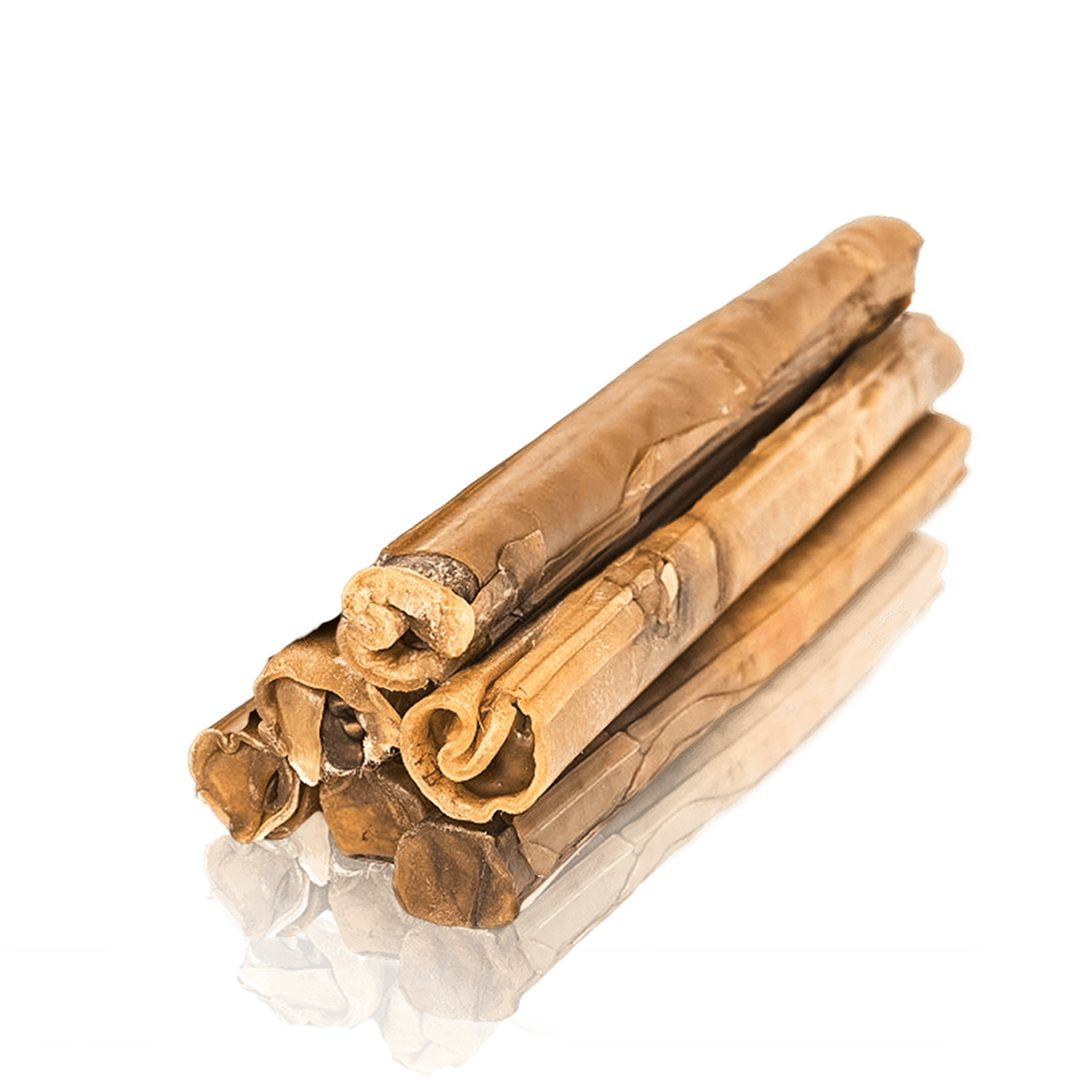
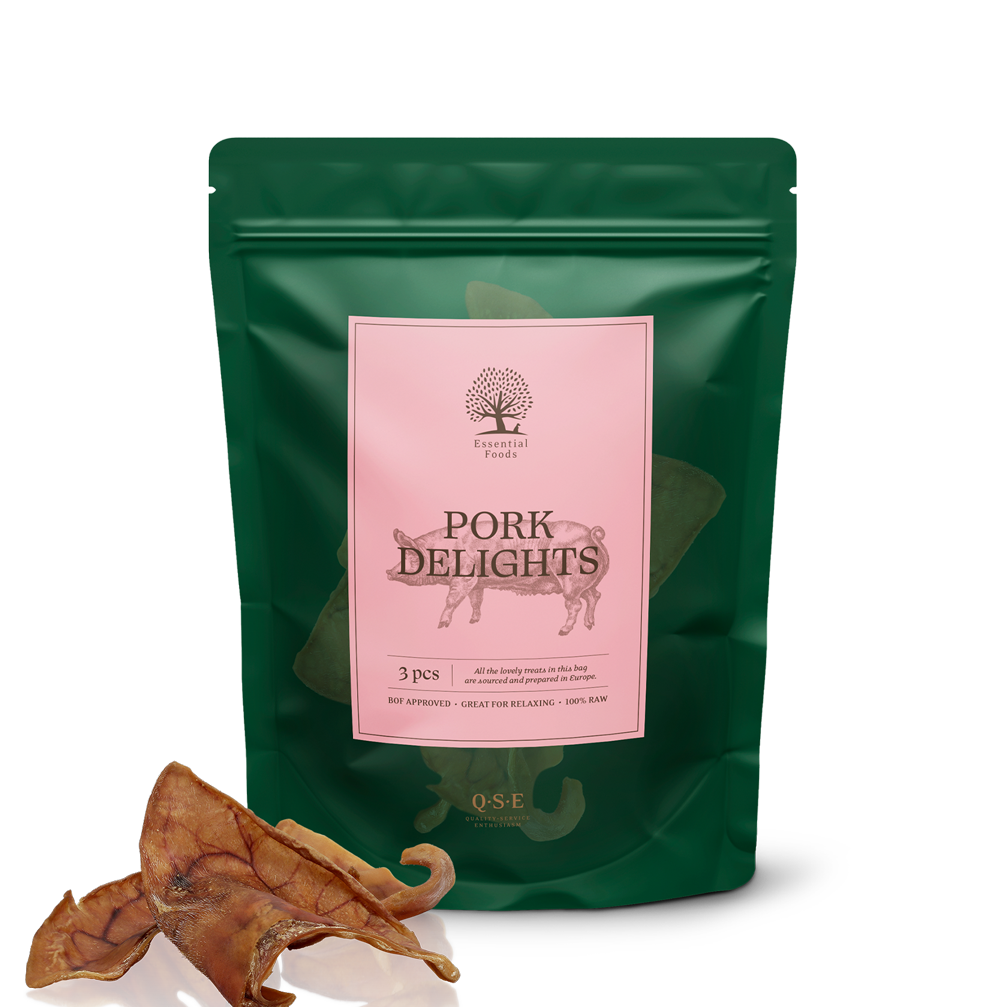
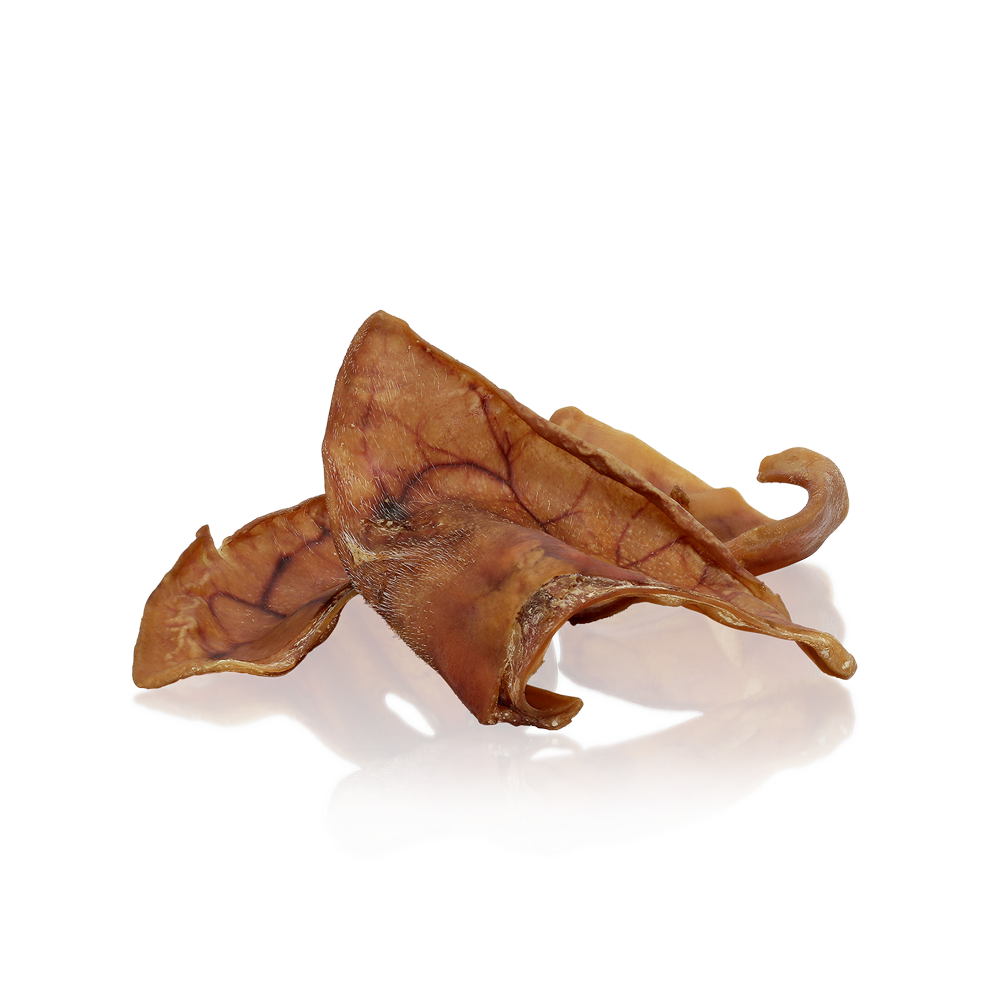
For that purpose you will find the large MARROW BONE DELIGHTS with marrow, as well as COW DELIGHTS and skin-based chews such as SKIN DELIGHTS and the milder SMALL LAMB SKIN DELIGHTS. If you want a longer chew that keeps the dog occupied, LARGE ROLLED DELIGHTS and SMALL ROLLED DELIGHTS are rolled chew sticks in two sizes. We have gathered more about natural chews in natural chew bones for dogs.
Match the size to your dog
A chew treat should suit the dog's jaws. If you give a small dog a large marrow bone, it cannot get at it properly, and if you give a large dog a small slice, it disappears before it can benefit the teeth, and there is a risk that it is swallowed whole.
Several of the products therefore come in two sizes, so you can choose according to the dog rather than compromising. The rolled chews come both as small and large, and cod comes in both a small and a large variant. For the smallest breeds and puppies, the tiny fish pieces are easiest to chew through. If you are unsure what suits a small dog, we have written more in dog food for small dogs.
How many treats may the dog have per day?
The common rule of thumb is that treats should make up at most around 10 percent of the dog's daily energy intake. The rest should come from the complete food that is composed to cover all nutritional needs. The reason is simple: Treats are rarely nutritionally complete, and too many of them upset the balance of the diet and add extra calories on top, which over time turn into excess weight.
In practice this means the amount depends on the dog's weight and on how energy-rich the individual treat is. A large chew treat counts for much more than a small piece of fish. If you use treats frequently in training, then deduct a correspondingly small amount from the daily food portion, so the equation works out. If you want to see it all worked through, we go into depth in how many treats may a dog have.
How to store natural treats
Because the treats here are dried and free of chemical preservatives, it is moisture you need to keep out. Store them dry and cool in a closed container or the closed bag, and avoid direct sunlight and damp places such as near the sink or in a steamy kitchen. If moisture gets in, even a dried treat can go mouldy.
The shelf life is stated on the individual pack, and you should always follow the date there rather than a general guess. If you open a larger bag, it keeps longest if you close it tightly again after each use and possibly transfer the contents into an airtight tin. If a treat looks or smells different from normal, then discard it rather than take the chance.
Treats for puppies
A puppy can certainly have natural treats, but there are two things to keep an eye on. The first is size and hardness: Milk teeth and a small mouth cannot cope with the hardest chews, so start with the soft ones and the small pieces. The second is the amount, which must be counted into the total daily ration exactly as with adult dogs, just with a smaller margin, because the puppy's food is fine-tuned for growth.
The small fish pieces and the milder skin treats are a good place to start. If you want to be sure of when and what your puppy may have, we have gathered it in when may puppies have treats and the range in puppy treats.